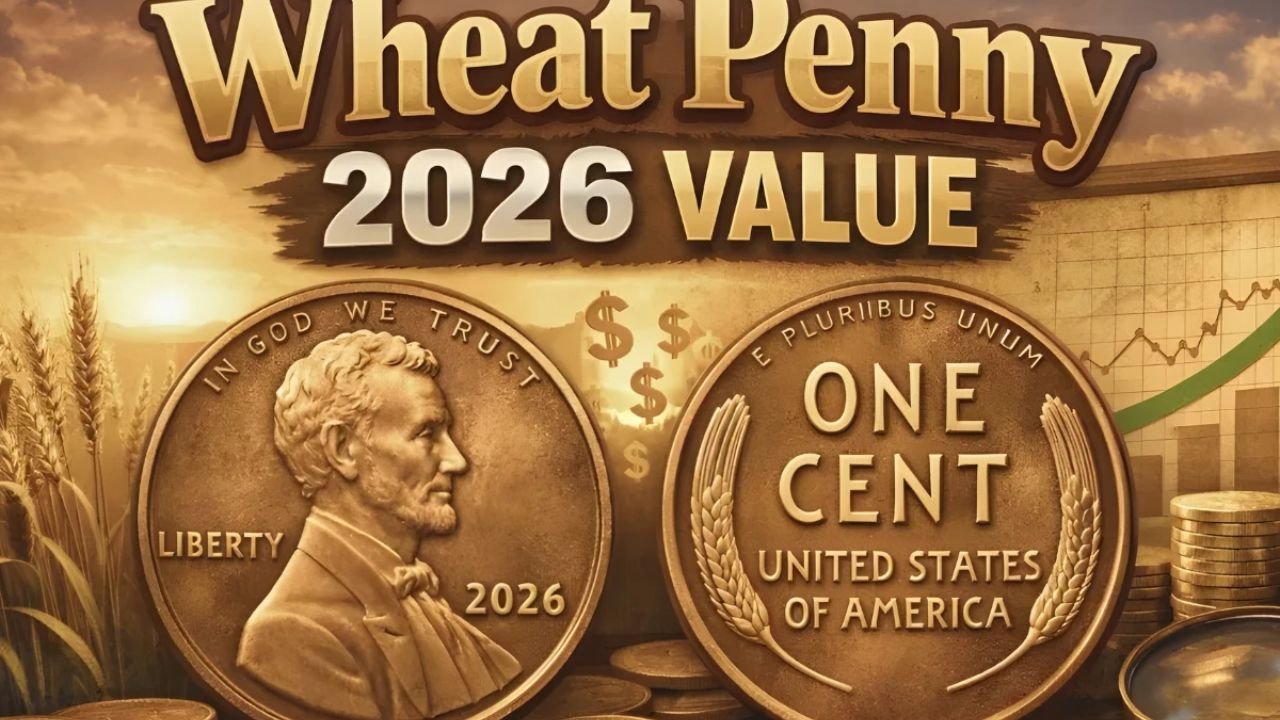
The Lincoln Wheat Penny remains one of the most recognizable and historically significant coins ever produced in the United States. Even decades after production ended, these small copper coins continue to capture the attention of collectors and investors alike. While most Wheat Pennies hold modest value, certain rare dates, mint marks, and minting errors can make specific coins worth hundreds, thousands, or even millions of dollars.
In 2026, collector demand for Wheat Pennies remains strong. Enthusiasts actively search through old collections, coin jars, and estate holdings hoping to uncover rare specimens that could carry significant financial value.
The History Behind the Lincoln Wheat Penny
The Lincoln Wheat Penny was first introduced in 1909 to commemorate the 100th anniversary of President Abraham Lincoln’s birth. The coin replaced the long-running Indian Head cent and introduced a new design that marked a major change in American coinage.
Designed by Victor David Brenner, the coin became the first U.S. circulating currency to feature the portrait of a real historical figure. Lincoln’s profile appears on the obverse, while the reverse side features two stylized wheat stalks surrounding the denomination “One Cent.” These wheat stalks symbolize prosperity, agriculture, and the nation’s economic foundation.
The Wheat Penny remained in production from 1909 until 1958. In 1959, the reverse design was replaced with the Lincoln Memorial, ending the Wheat Penny era but beginning a lasting legacy among collectors.
Why Some Wheat Pennies Are Worth More Than Others
Not all Wheat Pennies are valuable. In fact, most examples found today are common coins worth only a few cents above their face value. However, several important factors determine whether a Wheat Penny could be worth significant money.
Year and Mint Mark
One of the most important value indicators is the year and mint location where the coin was produced. U.S. pennies were minted in several facilities, including Philadelphia, Denver, and San Francisco.
Coins with lower mintages—meaning fewer coins were originally produced—are generally more valuable today. Mint marks such as “D” for Denver or “S” for San Francisco can dramatically affect a coin’s rarity.
Coin Condition

The condition of a coin plays a crucial role in determining its market price. Coins are graded based on how well their details have been preserved over time.
Professional grading levels include:
- Good
- Fine
- Very Fine
- Extremely Fine
- Mint State
Coins graded in Mint State show minimal wear and retain their original shine. Even a small improvement in grade can increase a coin’s value dramatically, especially for rare dates.
Mintage Numbers and Rarity
Another key factor is how many coins were originally struck. Some Wheat Pennies were produced in massive quantities, while others had limited mintages due to economic conditions or production changes.
Lower mintage coins naturally become harder to find as decades pass, making them highly desirable among collectors.
Key Wheat Pennies That Collectors Look For
Several Wheat Pennies have become famous in the numismatic world due to their rarity and value potential. These coins are often referred to as “key dates.”
1909-S VDB
This coin is one of the most famous Wheat Pennies ever minted. It features the designer’s initials “VDB” on the reverse and was produced in limited numbers at the San Francisco Mint.
Collectors consider it one of the essential coins for completing a Lincoln cent collection. High-grade examples regularly sell for thousands of dollars.
1914-D
Another highly sought-after coin is the 1914-D Wheat Penny. With a relatively low mintage from the Denver Mint, this coin is extremely difficult to find in high-quality condition.
Well-preserved specimens can command impressive prices at auction.
1922 “No D” Error
The 1922 Wheat Penny normally carries a Denver mint mark. However, due to worn dies during production, some coins were struck without the “D” mint mark.
These unusual coins are known as the “1922 No D” variety and are highly prized by collectors because of their distinctive error.
1931-S
During the Great Depression, coin production slowed significantly. The 1931-S Wheat Penny had a much lower mintage than surrounding years, making it another valuable piece in the series.
Collectors often pay a premium for high-grade examples.
The Legendary 1943 Copper Wheat Penny
Among all Wheat Pennies, the 1943 copper penny stands as one of the most valuable and mysterious coins ever produced.
During World War II, the U.S. Mint switched from copper to steel in order to conserve copper for wartime production. As a result, nearly all pennies produced in 1943 were made from zinc-coated steel.
However, a small number of copper planchets from 1942 were accidentally left in the presses. When these blanks were struck in 1943, they produced extremely rare copper pennies.
Only a handful of authentic examples are known to exist today. Depending on condition and certification, these coins have sold for hundreds of thousands—and in some cases, well over a million dollars.
Common Wheat Penny Values in 2026
While rare coins can command extraordinary prices, most Wheat Pennies fall into more modest value ranges.
Typical circulated Wheat Pennies often sell for:
- $0.03 to $0.10 for common dates
- $0.25 to $2 for better condition coins
- $5 to $50 for semi-key dates
However, rare varieties and high-grade examples can increase dramatically in value.
Some estimated value ranges include:
- 1909-S VDB: $1,200 – $2,800+
- 1914-D: $1,800 – $14,000+
- 1922 No D: $8,000 – $22,000+
- 1931-S: $900 – $4,500+
- 1943 Copper: $200,000 – $450,000+
These figures can fluctuate based on market demand, certification, and auction activity.
The Growing Market for Error Coins
Mint errors represent another exciting area of Wheat Penny collecting. These unusual coins result from mistakes during the minting process and often display unique characteristics.
Some common error types include:
- Doubled letters or numbers
- Missing mint marks
- Off-center strikes
- Incorrect metal composition
Because these coins are rare and visually distinctive, collectors are often willing to pay significant premiums for verified examples.
Why Wheat Pennies Remain Popular With Collectors
One reason Wheat Pennies remain popular is accessibility. Unlike many rare collectibles, these coins can still occasionally be discovered in old jars, inherited collections, or bank rolls.
The thrill of potentially finding a valuable coin in everyday change continues to attract both beginners and experienced collectors.
Additionally, Wheat Pennies represent a fascinating chapter in American history—from the early 20th century through the challenges of the Great Depression and World War II.
Long-Term Value Outlook
Looking ahead, the long-term outlook for Wheat Penny values remains positive. As time passes, more coins are absorbed into private collections or permanently removed from circulation.
This gradual reduction in supply makes surviving examples increasingly scarce, especially in high-grade condition.
For collectors and investors alike, Wheat Pennies offer a unique combination of historical significance, accessibility, and potential financial value. Whether found in an old coin album or discovered by chance, these small copper coins continue to prove that even a single cent can hold extraordinary worth.