Among modern U.S. coins, few stories capture the imagination of collectors quite like the rare Sacagawea dollar reportedly valued at up to $2.1 million. Introduced in 2000, the Sacagawea dollar was designed to replace the unpopular Susan B. Anthony dollar and bring renewed interest to dollar coins in everyday commerce. While most Sacagawea dollars are still worth only their face value, a handful of rare experimental versions and minting anomalies have become some of the most valuable modern coins ever discovered.
What makes this story particularly fascinating is the possibility that certain rare variations could still be hiding in everyday change. For collectors and casual coin enthusiasts alike, the idea that a small golden coin could hold extraordinary value continues to fuel interest in searching through coin jars, bank rolls, and inherited collections.
The Birth of the Sacagawea Dollar
The Sacagawea dollar was introduced by the United States Mint in 2000 as part of an effort to revitalize the use of dollar coins. The previous Susan B. Anthony dollar had struggled to gain acceptance among the public due to its resemblance to the quarter.
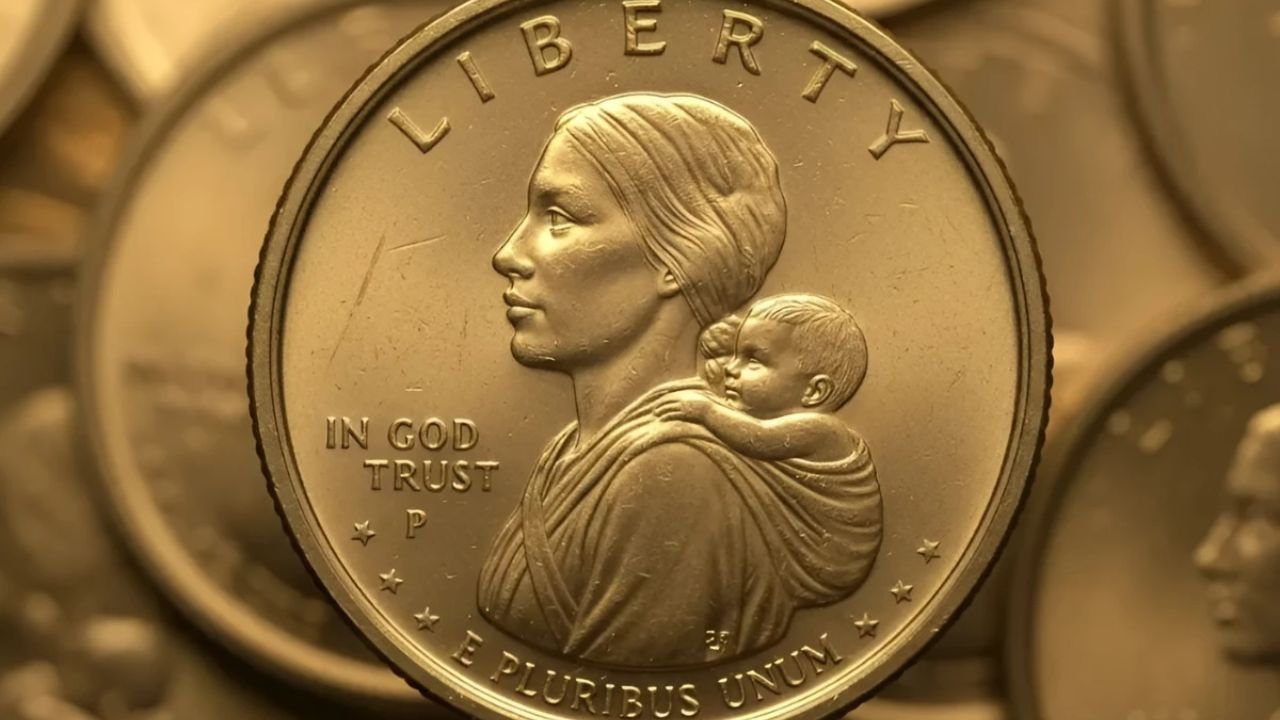
To avoid repeating that mistake, the new coin was given a distinctive golden color and a completely different design. The obverse features Sacagawea, the young Shoshone woman who played a crucial role as a guide and interpreter during the Lewis and Clark Expedition in the early 19th century.
In the design, Sacagawea is shown carrying her infant son, Jean-Baptiste, on her back. This imagery symbolizes exploration, resilience, and the cultural diversity that shaped American history.

The reverse side of the original 2000 coin features a soaring eagle designed by artist Thomas D. Rogers. The eagle represents freedom, national ambition, and the spirit of exploration.
Why Some Sacagawea Dollars Are Extremely Valuable
Most Sacagawea dollars were produced in enormous quantities, making them common in circulation. Billions of coins have been minted since the series began, meaning the vast majority remain worth only one dollar.
However, certain rare variations have become incredibly valuable due to unusual production circumstances. The most famous examples involve experimental materials or minting errors that occurred during the early development of the coin.

When these rare anomalies appear in the collecting market, they often command remarkable prices due to their rarity and historical importance.
The Role of Experimental Planchets
During the development of the Sacagawea dollar, the U.S. Mint tested several different metal compositions before finalizing the coin’s distinctive golden alloy.
The official composition chosen for circulation consists primarily of copper combined with manganese brass, which gives the coin its recognizable golden appearance.
However, during the testing phase, experimental blanks—known as planchets—were produced using different metal mixtures. These test pieces were never intended for public circulation.
In extremely rare cases, coins struck on experimental planchets may have entered circulation accidentally. Because these coins differ from standard issues in weight, color, or metallic composition, they can be extraordinarily valuable once verified by experts.
Unique Visual and Physical Characteristics
Collectors searching for rare Sacagawea dollars often examine coins closely for subtle differences that might indicate an unusual variety.
Some of the features experts look for include:
Unusual Surface Finish
Rare experimental coins may display a proof-like reflective surface that differs from the normal satin finish seen on circulation coins.
Slight Differences in Color
Changes in alloy composition can produce subtle variations in color, ranging from brighter gold tones to darker bronze shades.
Weight Variations
Coins struck on test planchets may weigh slightly more or less than standard Sacagawea dollars.
Sharper Design Details
Some rare specimens exhibit unusually crisp design features due to special minting conditions.
Because these characteristics can be difficult to identify without specialized equipment, professional authentication is essential for confirming a coin’s rarity.
Could Rare Coins Still Be in Circulation?
One of the most intriguing aspects of modern coin collecting is the possibility that valuable coins may still be circulating unnoticed.
Unlike centuries-old coins that have long been removed from circulation, Sacagawea dollars are relatively new. Many people still receive them in bank rolls, vending machines, or public transportation systems.
This means rare varieties could theoretically remain undiscovered in everyday change. For collectors, this possibility adds excitement and motivation to search through coins more carefully.
Stories occasionally emerge of valuable coins being discovered in old jars, inherited coin collections, or unopened bank rolls.
Market Demand for Rare Sacagawea Dollars
The coin collecting market is driven largely by two factors: rarity and historical significance. When a coin combines both elements, its value can increase dramatically.
The rare Sacagawea dollar associated with the $2.1 million valuation represents a unique moment in U.S. Mint history—when experimental materials and a new coin design intersected.
High-net-worth collectors, specialized numismatic investors, and museums often compete to acquire such extraordinary coins. When one appears at auction, it can attract significant global attention.
Typical Sacagawea Dollar Values
Although rare varieties can command astonishing prices, most Sacagawea dollars remain modestly valued.
Here is a general overview of current market values:
| Coin Type | Typical Condition | Estimated Value |
|---|---|---|
| Standard Sacagawea Dollar | Circulated | $1 |
| Uncirculated Sacagawea Dollar | Mint State | $3 – $5 |
| Proof Sacagawea Dollar | Collector Proof | $10 – $50 |
| Verified Error Coin | Rare Mint Error | $5,000 – $100,000 |
| Experimental Alloy Coin | Extremely Rare | Up to $2.1 Million |
Actual values vary depending on authentication, condition, rarity, and demand among collectors.
The Importance of Professional Authentication
Whenever a potentially rare coin is discovered, professional grading becomes critical. Experts use specialized equipment to analyze a coin’s weight, metal composition, strike characteristics, and surface details.
Professional grading services assign a numerical grade that reflects the coin’s condition and authenticity. Once certified, rare coins often become significantly more valuable because collectors trust the verification process.
Without professional confirmation, even unusual-looking coins may have little market value.
Cultural and Historical Significance
Beyond financial value, the Sacagawea dollar holds important cultural meaning. The coin honors a Native American woman whose contributions helped shape one of the most famous exploration journeys in American history.
For many collectors, owning a Sacagawea dollar represents more than an investment. It reflects appreciation for historical narratives that extend far beyond traditional political figures.
The coin also represents a turning point in modern U.S. coin design, emphasizing cultural recognition and storytelling through currency.
A Modern Coin With a Lasting Legacy
The story of the rare $2.1 million Sacagawea dollar demonstrates how even modern coins can become extraordinary collectibles. Unique minting experiments, limited surviving examples, and strong collector demand have transformed certain coins into highly sought-after treasures.
As coin collecting continues to grow worldwide, the possibility of discovering rare varieties in circulation keeps the hobby exciting.
For collectors and curious individuals alike, the message is simple: sometimes, a coin that appears ordinary at first glance could turn out to be something truly remarkable.