
Few American coins combine artistic beauty, historical significance, and strong collector demand quite like the Mercury Dime. Officially known as the Winged Liberty Head Dime, this coin has become one of the most admired silver coins ever produced by the United States Mint. Its elegant design, precious metal composition, and collectible date variations make it a cornerstone of classic U.S. coin collecting.
Even decades after its final year of production, the Mercury Dime remains highly desirable among collectors and investors. Whether found in circulated condition or preserved in pristine mint state, these silver dimes continue to maintain strong market interest. Understanding their silver content, key dates, and grading factors is essential for anyone interested in the value of this historic coin series.
The Origins of the Mercury Dime
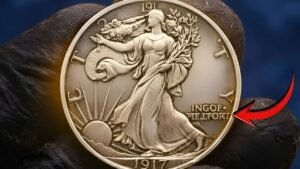
The Mercury Dime was introduced in 1916, replacing the long-running Barber Dime design. The new coin was created during a period when the U.S. Mint sought to modernize American coinage by introducing more artistic designs.
Sculptor Adolph A. Weinman designed the coin, creating an obverse that features Liberty wearing a winged cap. The wings symbolize freedom of thought, but many people mistakenly associated the design with Mercury, the Roman messenger god. This misunderstanding eventually gave the coin its widely used nickname, the Mercury Dime.
The reverse design displays a fasces—a bundle of rods tied together—symbolizing unity and strength. An olive branch appears alongside the fasces, representing peace. Together, these elements reflect the balance between strength and diplomacy that defined American ideals during the early twentieth century.

The Mercury Dime was produced from 1916 through 1945, after which it was replaced by the Roosevelt Dime.
Coin Specifications and Silver Composition
Mercury Dimes follow the standard specifications used for U.S. dimes during the early twentieth century.
| Feature | Specification |
|---|---|
| Years Minted | 1916–1945 |
| Diameter | 17.9 mm |
| Weight | 2.50 grams |
| Composition | 90% Silver, 10% Copper |
| Silver Content | 0.07234 Troy Ounces |
| Edge | Reeded |
Because of their 90 percent silver content, Mercury Dimes maintain intrinsic value tied to the price of silver. Even heavily circulated examples retain a base value based on their precious metal content.
However, numismatic factors such as rarity and condition often push prices far beyond their melt value.
Rare Dates That Command High Prices
While many Mercury Dimes are common and affordable, several rare dates stand out as key coins in the series. These coins are highly sought after and can command significant premiums.
1916-D Mercury Dime
The 1916-D is the most famous rarity in the series. Produced at the Denver Mint with a mintage of only 264,000 coins, it is the lowest mintage Mercury Dime ever issued.
Even well-worn examples can sell for hundreds or thousands of dollars, while high-grade specimens may reach five figures at auction.
1921 and 1921-D
Coins from 1921 and 1921-D are also scarce due to relatively low mintages during a period of reduced coin production following World War I. These dates are difficult to locate in strong condition and remain essential for collectors completing a full date-and-mintmark set.
1942/41 Overdate Varieties
One of the most intriguing errors in the Mercury Dime series is the 1942/41 overdate variety. This occurs when the die used to strike coins shows traces of both the 1941 and 1942 dates.
These error coins are rare and highly desirable among collectors who specialize in minting varieties.
Mintmarks and Production Locations
Mercury Dimes were produced at three U.S. Mint facilities, each identified by a small mintmark.
Coins struck in Philadelphia carry no mintmark, while those from Denver display a D and coins produced in San Francisco carry an S.
The mintmark appears on the reverse side of the coin, positioned near the bottom of the fasces. Collectors carefully examine this detail because different mint locations often produced coins with varying levels of rarity.
Certain mint combinations are far more difficult to find than others, making them especially valuable within the series.
The Importance of Full Bands
One of the most critical grading features for Mercury Dimes is the presence of Full Bands, often abbreviated as FB.
On the reverse side of the coin, horizontal bands appear across the fasces. When these bands are sharply defined and fully separated, the coin may receive the Full Bands designation from professional grading services.
Coins with Full Bands are significantly rarer because many Mercury Dimes were struck with weak details in this area. As a result, the FB designation can dramatically increase the coin’s value.
Collectors seeking high-quality specimens often prioritize Full Bands coins when building advanced sets.
Grading and Condition Factors
Like other collectible coins, Mercury Dimes are graded using the Sheldon scale, which ranges from Poor-1 to Mint State-70.
Most Mercury Dimes found in circulation today fall within lower grades such as Good, Very Fine, or Extremely Fine. These coins still display recognizable design details but show signs of wear from circulation.
Coins preserved in Mint State condition, particularly grades MS-63 through MS-67, represent the upper tier of the collector market.
Key grading factors include:
- Sharpness of Liberty’s facial features and cap details
- Clarity of the fasces and olive branch
- Strength of the horizontal bands on the reverse
- Surface luster and lack of scratches
Professional certification by grading organizations such as PCGS or NGC is often recommended for high-value examples.
Current Market Value
Mercury Dime values vary widely depending on rarity, condition, and collector demand.
Common circulated coins often sell between $3 and $6, primarily reflecting their silver melt value. Coins in moderately circulated condition may reach $8 to $25, depending on their visual appeal.
Uncirculated coins graded MS-63 frequently sell between $30 and $75 for common dates. However, rare dates and coins with the Full Bands designation can achieve dramatically higher prices.
The rare 1916-D, for example, can exceed $800 even in worn condition, while pristine specimens with Full Bands may sell for $10,000 to $15,000 or more at major auctions.
Investment Potential
The Mercury Dime offers a compelling investment opportunity for both collectors and precious metal enthusiasts. Its silver content provides intrinsic value tied to global silver markets, while rare dates and high-grade specimens carry additional numismatic premiums.
Registry set competition among advanced collectors continues to drive demand for top-graded examples, particularly those with the Full Bands designation.
Because the series is well-established and widely collected, it enjoys a stable market with consistent liquidity. Investors who focus on certified high-grade coins from key dates often benefit from long-term price appreciation.
A Timeless American Coin
The Mercury Dime stands as one of the most elegant and historically meaningful coins ever produced by the United States Mint. Its artistic design, precious metal composition, and range of collectible varieties ensure that it remains a favorite among collectors worldwide.
From affordable circulated pieces to rare high-grade treasures worth thousands of dollars, the Mercury Dime offers something for every level of collector.
More than a century after its introduction, this small silver coin continues to represent the enduring appeal of classic American coinage—and the fascinating stories that can be found within everyday currency.