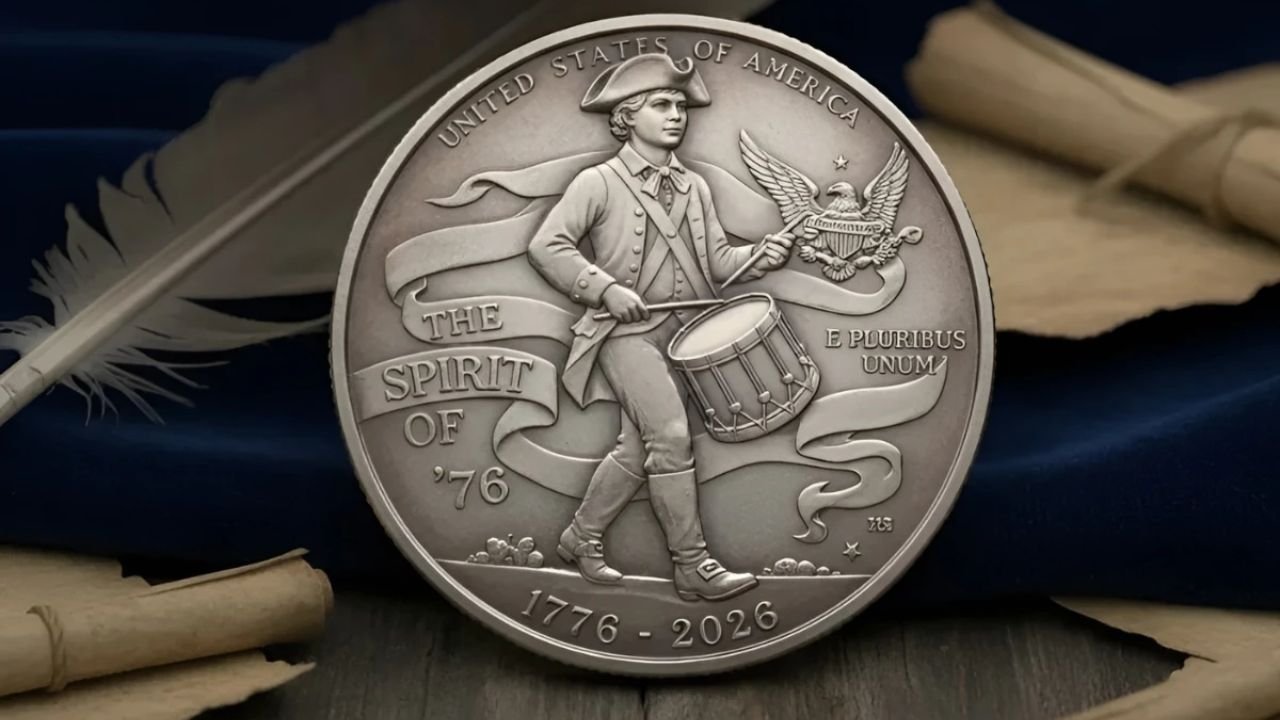
The 1976 Drummer Boy Quarter holds a unique place in American coin history. Issued to celebrate the 200th anniversary of the United States, this special quarter features one of the most recognizable commemorative designs ever produced by the U.S. Mint. While millions of these coins were released into circulation, certain versions—especially silver issues and top-grade specimens—have become highly desirable among collectors.
More than just pocket change, the Bicentennial quarter symbolizes a historic national celebration and continues to attract both hobbyists and serious numismatists. Today, the value of the 1976 Drummer Boy Quarter depends heavily on its composition, mint origin, and overall condition.
The Bicentennial Quarter: A Historic Commemorative Coin
In preparation for the United States Bicentennial in 1976, the U.S. Mint introduced special designs for the quarter, half dollar, and dollar coins. These commemorative pieces replaced the regular reverse designs for a limited time, creating a unique collectible series.
The quarter’s obverse retains the classic portrait of George Washington, originally designed by John Flanagan. However, the date was modified to display the dual year 1776–1976, commemorating two centuries since the signing of the Declaration of Independence.
The reverse design, created by artist Jack L. Ahr, features a colonial drummer standing beside a torch encircled by thirteen stars. The imagery represents the spirit of the American Revolution and honors the original thirteen colonies that formed the nation.

This striking design quickly became one of the most beloved in modern U.S. coinage.
Key Specifications of the 1976 Drummer Boy Quarter
Despite its unique design, the Bicentennial quarter follows the same general specifications as the standard Washington quarter.
| Feature | Specification |
|---|---|
| Year | 1776–1976 |
| Diameter | 24.3 mm |
| Weight | 5.67 grams (clad) |
| Edge | Reeded |
| Designer (Reverse) | Jack L. Ahr |
| Mint Facilities | Philadelphia, Denver, San Francisco |
The coin’s size and shape remain consistent with other quarters, making it easy to recognize in everyday circulation.
Two Different Metal Compositions

One of the most important factors affecting the value of a 1976 Drummer Boy Quarter is its metal composition. The U.S. Mint produced the coin in two primary versions.
Standard Copper-Nickel Clad
Most Bicentennial quarters were struck for general circulation using a copper-nickel clad composition. These coins consist of outer layers of nickel bonded to a pure copper core.
This standard version weighs approximately 5.67 grams and was produced in very large numbers.
Because of the high mintage, most circulated examples remain worth only their face value. However, uncirculated pieces in excellent condition can still attract collector interest.
40% Silver Collector Version
A special collector version of the Bicentennial quarter was also produced using a 40% silver composition. These coins were not intended for circulation and were sold in special collector sets.
Silver versions weigh slightly more—approximately 5.75 grams—and carry intrinsic metal value along with their collectible appeal.
Because fewer silver quarters were produced, they tend to command higher prices in the collector market.
Mintmarks and Production Locations
The 1976 Drummer Boy Quarter was minted at three different facilities, each identifiable by a mintmark.
Philadelphia Mint
Coins produced in Philadelphia carry no mintmark. These were struck primarily for circulation and represent the most common version.
Denver Mint
Quarters minted in Denver display a “D” mintmark on the obverse side. Like the Philadelphia version, most Denver coins entered everyday circulation.
San Francisco Mint
The San Francisco facility produced special collector editions marked with an “S” mintmark. These include both proof coins and silver proof coins made specifically for collectors.
San Francisco issues often exhibit sharper details and mirror-like surfaces, making them particularly attractive to collectors.
Understanding Coin Grades
Condition plays a critical role in determining the value of a Bicentennial quarter. Professional grading services evaluate coins using the Sheldon scale, which ranges from Poor-1 to Mint State-70.
Most coins found in circulation fall within lower grades due to wear from everyday use. However, coins preserved in uncirculated condition can achieve significantly higher values.
Collectors pay special attention to several features when evaluating a 1976 Drummer Boy Quarter:
- Sharpness of the drummer’s drumsticks and uniform details
- Surface luster and brightness
- Lack of scratches or marks
- Strong strike on both obverse and reverse
High-grade coins that retain full detail and original luster are far less common than circulated examples.
Market Value of the 1976 Drummer Boy Quarter
The value of this coin varies widely depending on composition and grade.
Circulated Clad Coins
Most circulated quarters remain worth their face value of 25 cents, though particularly well-preserved examples may sell for slightly more.
Uncirculated Clad Coins
Mint-state examples typically sell for $5 to $35, depending on overall quality and eye appeal.
Silver Bicentennial Quarters
Silver versions carry higher value due to their metal content and collector demand. Prices often range between $20 and $60 for well-preserved examples.
Proof and Deep Cameo Coins
Proof coins produced at the San Francisco Mint feature highly polished dies that create mirror-like surfaces. Coins with the Deep Cameo designation—meaning strong contrast between frosted designs and reflective fields—are especially desirable.
These coins can sell for $40 to $90, while perfect PR-70 graded examples sometimes reach $150 to $300 or more.
Why Collectors Love the Bicentennial Quarter
The 1976 Drummer Boy Quarter remains popular for several reasons.
First, it represents a historic national milestone. The Bicentennial celebration marked 200 years of American independence, making these coins historically significant.
Second, the design is visually distinctive. The colonial drummer stands out among traditional coin designs, giving the quarter strong visual identity.
Finally, the coin offers multiple collecting paths. Beginners can easily obtain circulated examples, while advanced collectors can pursue silver proofs and top-graded specimens.
This flexibility keeps the coin relevant across all levels of the collecting community.
Investment Outlook
While common Bicentennial quarters are not rare, certain versions show strong long-term potential.
Silver proof coins and high-grade certified examples remain the most attractive to investors. Their limited supply and growing collector demand support gradual value growth over time.
Registry collectors—those competing to assemble the highest-graded coin sets—also drive demand for premium examples. This competition often pushes the prices of top-quality coins significantly higher.
A Lasting Symbol of American Coinage
The 1976 Drummer Boy Quarter remains one of the most recognizable coins ever produced by the United States Mint. Its commemorative design, historical significance, and collectible variations ensure that it continues to capture attention decades after its release.
For collectors, it offers an accessible entry into the world of numismatics while still providing opportunities to pursue rare and valuable high-grade examples.
Whether discovered in everyday change or preserved in a collector’s set, the Bicentennial quarter stands as a lasting tribute to American history—and a reminder that even ordinary coins can hold extraordinary stories.